
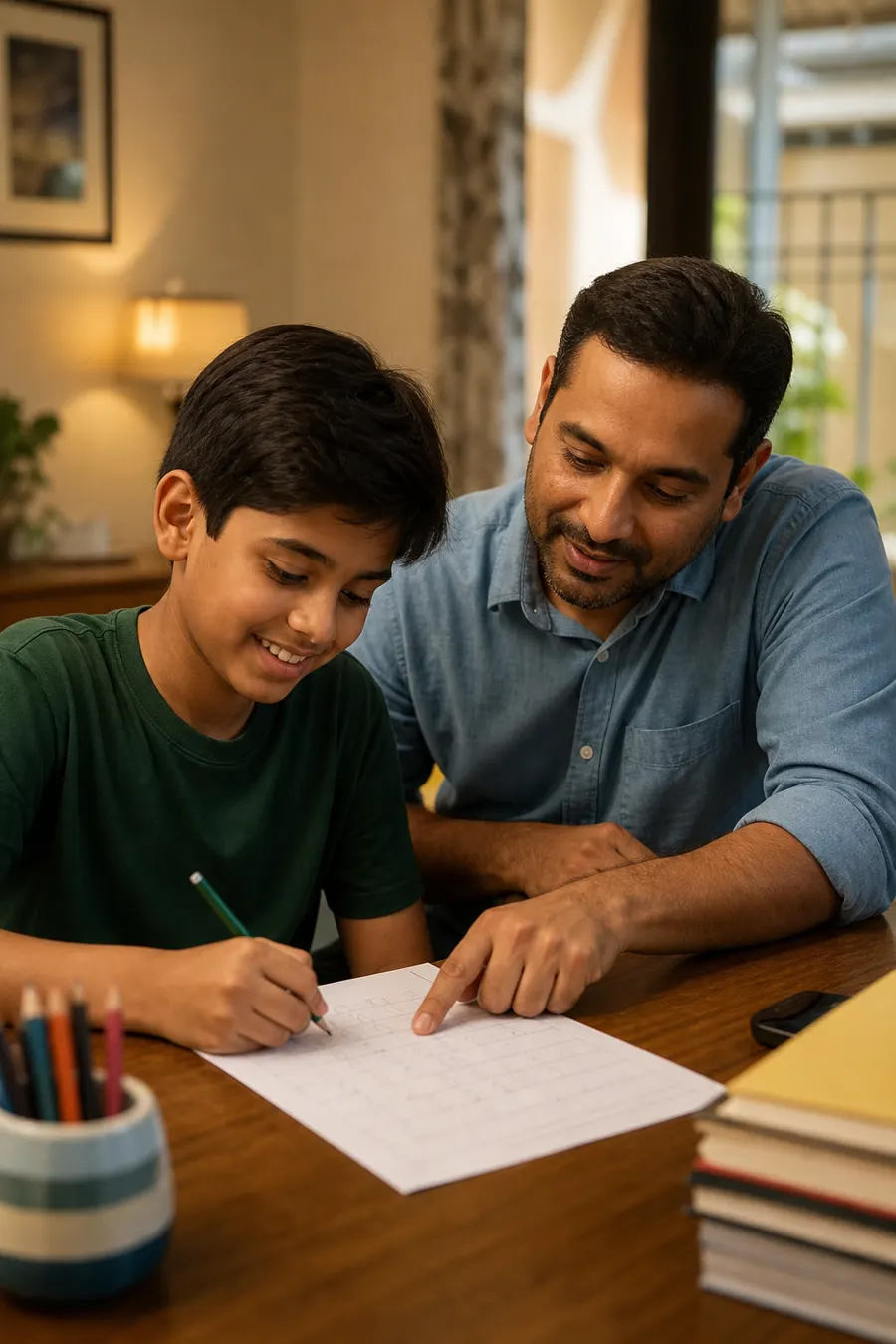
When should a child start signing?
There's no fixed age. A good moment is when your child writes joined (cursive) letters comfortably, usually around 8–10, and definitely before their first official form: board exams, a school ID, a bank account or a passport they sign themselves. Starting early means the signature on their first records is the one they keep.
What makes a good signature for a child
- Simple: a clear first letter and joined letters, no complicated loops.
- Readable: exam boards and banks need to match it.
- Grown-up enough: something they won't be embarrassed by at 25.
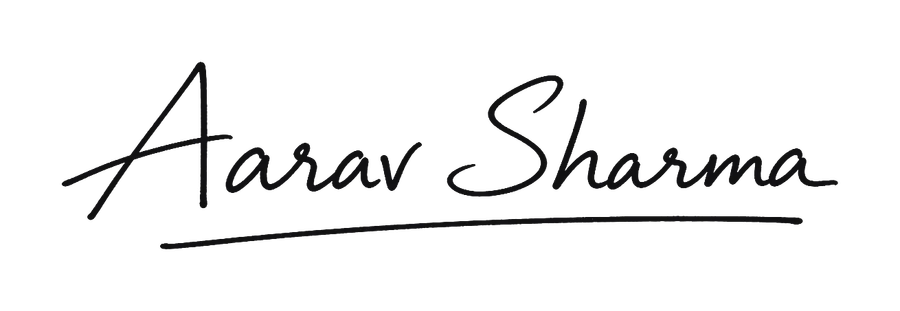
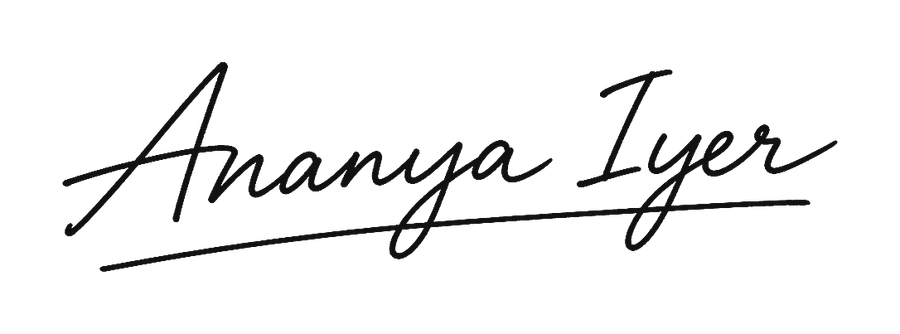
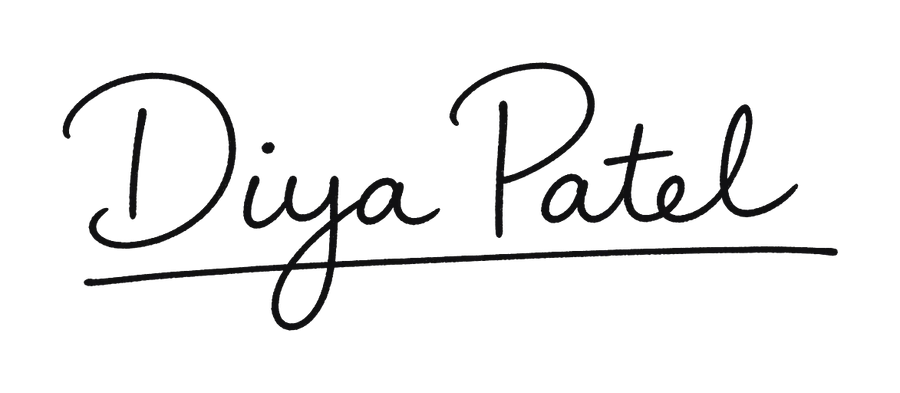
The 7-day method
- Choose the design together. Let your child pick from 2–4 options; they'll practise one they like.
- Days 1–3: trace. Print a practice sheet and trace the grey signature 10 times, slowly, after dinner.
- Days 4–5: copy. Sign on empty lines while looking at the example.
- Days 6–7: from memory. Sign without looking, at normal speed, inside a box the size of an exam form's.
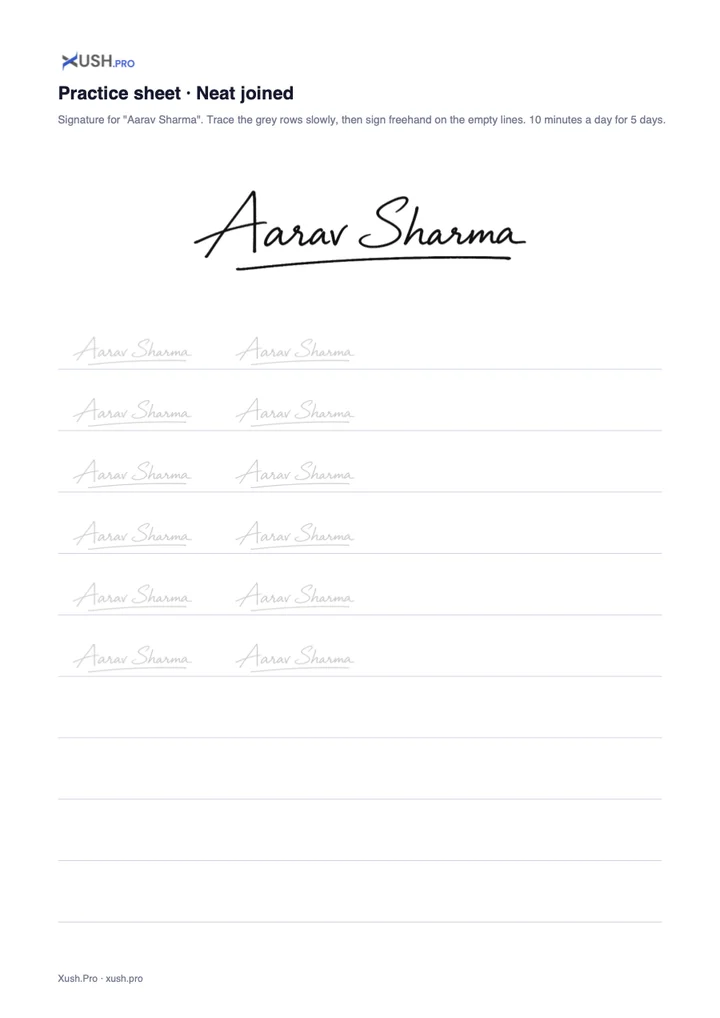
Tip: keep sessions to 10 minutes and praise consistency, not beauty. A plain signature signed the same way every time beats a fancy one that changes.